Othernity

Othernity, Hungary’s exhibition at the 2021 Venice Architecture Biennale, explores how the modernist legacy of Central and Eastern Europe can be reinterpreted in light of today’s social and environmental shifts. Rather than demolishing this heritage, it proposes a collaborative renewal of socialist modernism.

12 buildings. 12 practices. 12 ideas.
Twelve emerging studios reimagined twelve iconic Budapest buildings, offering fresh perspectives on their architectural and cultural value.

Event design
Event design
Editorial
Editorial
Website design
Website design
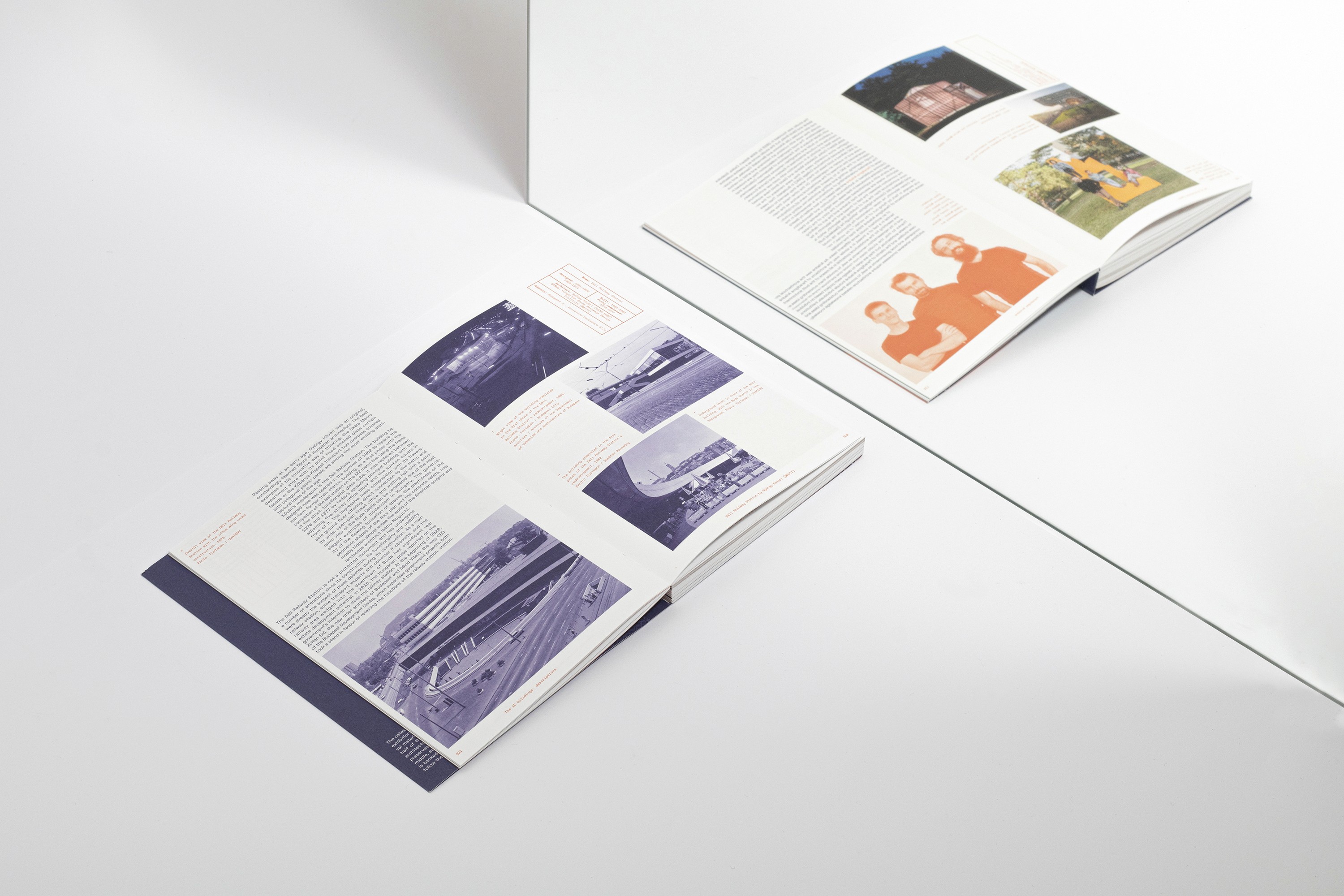
Othernity book design — Hungarian Pavilion, Venice Architecture Biennale 2021. Minimalist publication design reflecting the identity of the exhibition on socialist modernism and emerging architectural practices. Design by Marcell Kazsik
Editorial layout from the Othernity book, combining archival photographs, essays, and architectural documentation in a contemporary typographic system. Design by Marcell Kazsik
Installation view of Othernity — Hungarian Pavilion at the Venice Architecture Biennale 2021, showcasing contemporary reinterpretations of socialist modernist buildings from Central and Eastern Europe. Designed by Marcell Kazsik
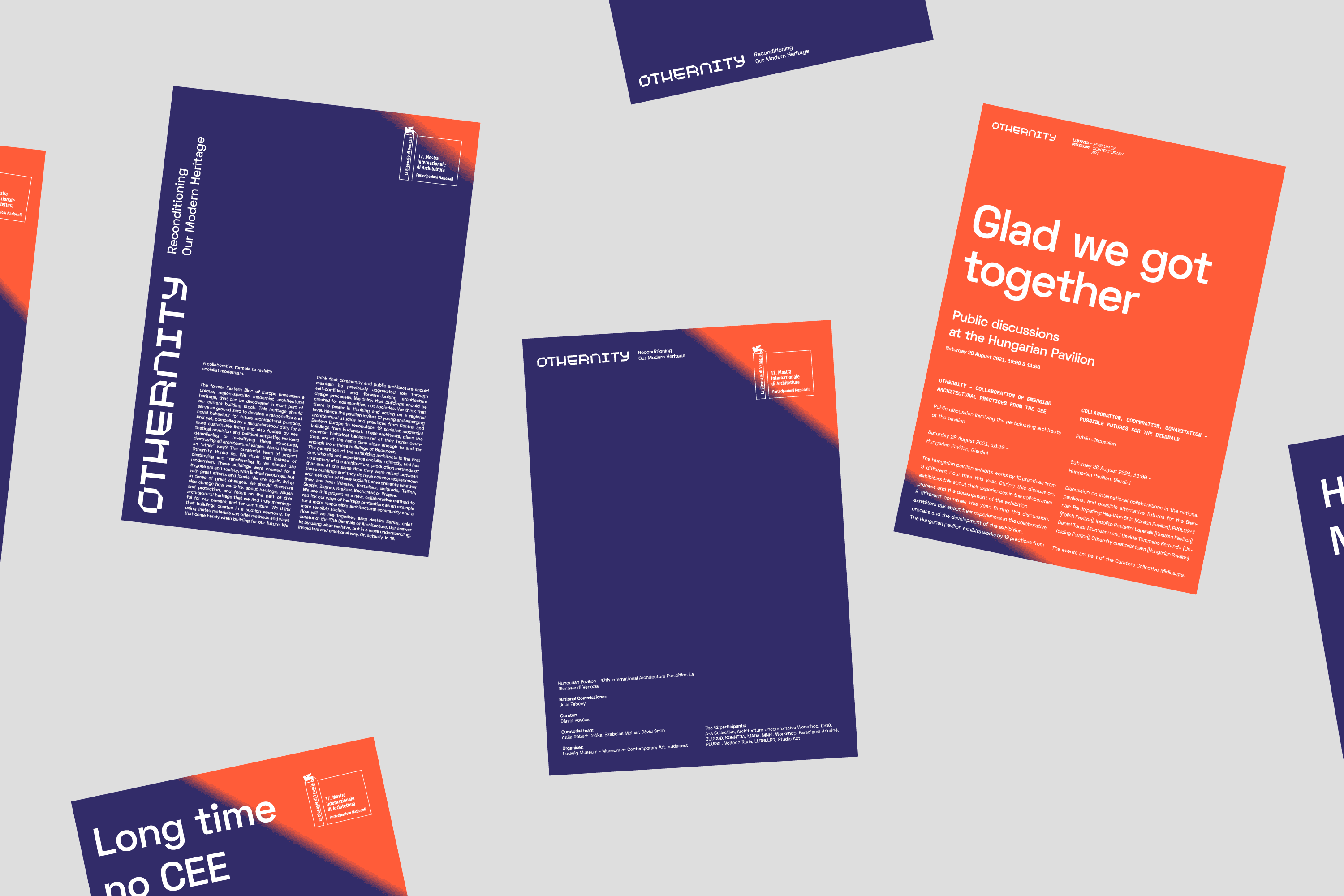
Poster design for Othernity — Hungarian Pavilion, Venice Architecture Biennale 2021. Contemporary reinterpretation of socialist modernist graphics through geometric layout and minimalist typography. Designed by Marcell Kazsik
Editorial layout from the Othernity book, combining archival photographs, essays, and architectural documentation in a contemporary typographic system. Design by Marcell Kazsik
Architectural model from Othernity project, illustrating a young architect's proposal for reviving mid-century modernist housing in Budapest.
Installation view of Othernity — Hungarian Pavilion at the Venice Architecture Biennale 2021, showcasing contemporary reinterpretations of socialist modernist buildings from Central and Eastern Europe. Designed by Marcell Kazsik
Architectural model from Othernity project, illustrating a young architect's proposal for reviving mid-century modernist housing in Budapest.
Poster design for Othernity — Hungarian Pavilion, Venice Architecture Biennale 2021. Contemporary reinterpretation of socialist modernist graphics through geometric layout and minimalist typography. Designed by Marcell Kazsik
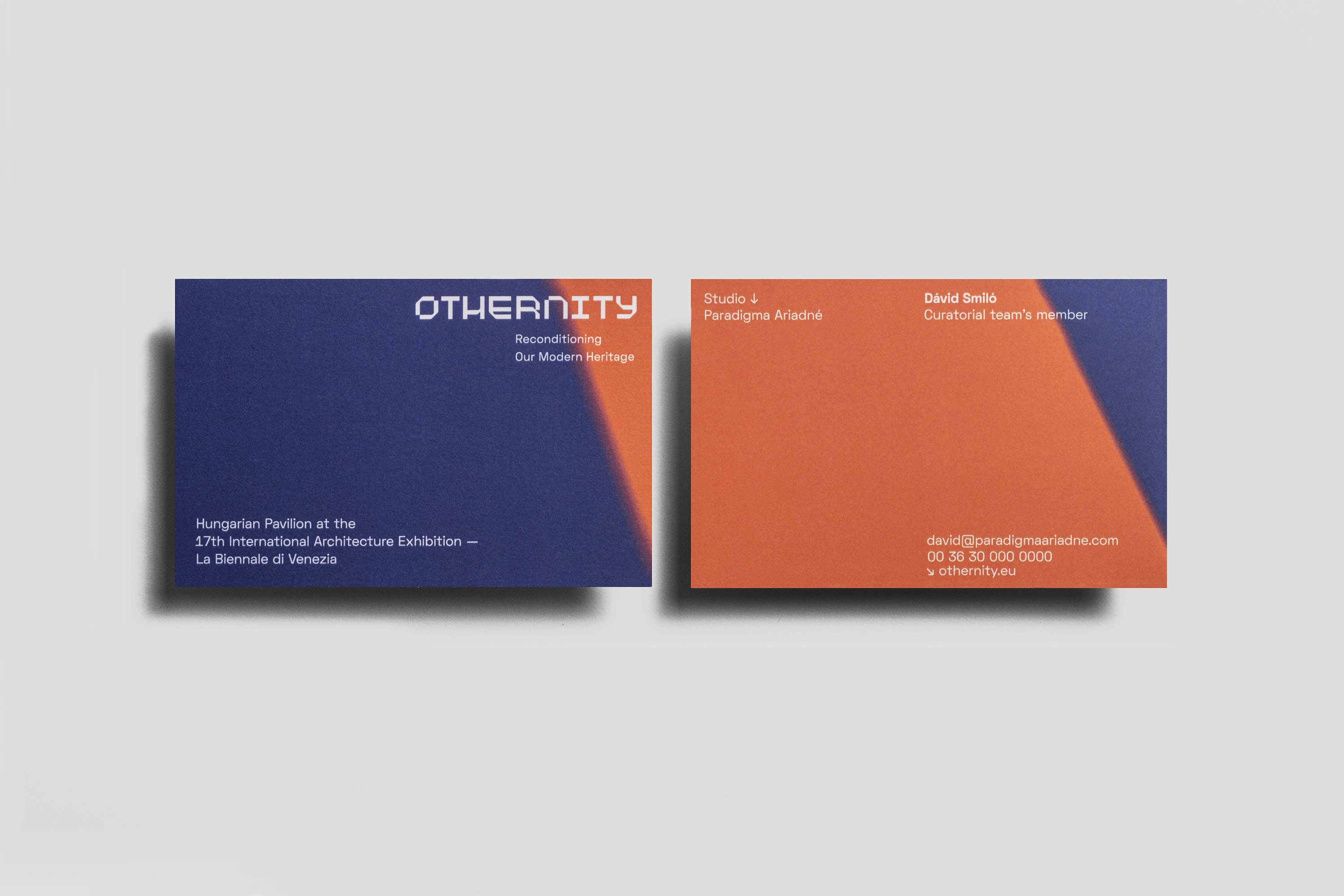
usiness card design for Othernity — Hungarian Pavilion visual identity. Minimal layout, monospaced typography, and embossed logo reflecting modernist precision. Designed by Marcell Kazsik

Background

Othernity, Hungary’s contribution to the 17th International Architecture Exhibition — La Biennale di Venezia, reinterprets the architectural legacy of socialist modernism through a regional, collaborative lens. The exhibition invited 12 emerging architectural practices from Central and Eastern Europe to rethink 12 emblematic buildings of Budapest, proposing new, forward-looking narratives for this contested heritage. Designed for the Ludwig Museum of Contemporary Art, the project required a cross-platform identity — spanning exhibition graphics, catalogue, website, and communication materials — that could embody both the intellectual depth of the curatorial concept and its experimental, collective spirit.

Outcome

The visual language merges the precision of architectural thinking with the vitality of contemporary design. Built around the tension of blue and orange — symbols of past and future, East and West — the system reflects the exhibition’s core dialectic between heritage and renewal. The catalogue mirrors the spatial logic of the pavilion: two halves converging at the centre, where mirrored layouts and reversed pagination embody the meeting of eras and ideas. Typographic experimentation and strict modular composition evoke modernist structure while allowing for expressive variation. Across print and digital formats, Othernity communicates the progressive energy of a generation re-examining its built legacy — turning reflection into reconstruction.

Credits

Organiser: Ludwig Museum of Contemporary Art National Commissioner: Julia Fabényi Curator: Dániel Kovács Curatorial Team: Attila Róbert Csóka, Szabolcs Molnár, Dávid Smiló The Hungarian curatorial team is a member of the Curator's Collective. Curatorial Assistant: Laura Sütöri Invited Participants: A-A Collective, Architecture Uncomfortable Workshop, b210, BUDCUD, KONNTRA, MADA, MNPL WORKSHOP, Paradigma Ariadné, PLURAL, Vojtěch Rada, LLRRLLRR, Studio Act Architectural and installation photo: Dániel Dömölky Project Coordination - Venice Biennale Office: Géza Boros, Anna Bálványos, Zsigmond Lakó​​​​​​​ Object photos, graphic design and web: Marcell Kazsik Date: 2019—2021

Background

Othernity, Hungary’s contribution to the 17th International Architecture Exhibition — La Biennale di Venezia, reinterprets the architectural legacy of socialist modernism through a regional, collaborative lens. The exhibition invited 12 emerging architectural practices from Central and Eastern Europe to rethink 12 emblematic buildings of Budapest, proposing new, forward-looking narratives for this contested heritage. Designed for the Ludwig Museum of Contemporary Art, the project required a cross-platform identity — spanning exhibition graphics, catalogue, website, and communication materials — that could embody both the intellectual depth of the curatorial concept and its experimental, collective spirit.

Outcome

The visual language merges the precision of architectural thinking with the vitality of contemporary design. Built around the tension of blue and orange — symbols of past and future, East and West — the system reflects the exhibition’s core dialectic between heritage and renewal. The catalogue mirrors the spatial logic of the pavilion: two halves converging at the centre, where mirrored layouts and reversed pagination embody the meeting of eras and ideas. Typographic experimentation and strict modular composition evoke modernist structure while allowing for expressive variation. Across print and digital formats, Othernity communicates the progressive energy of a generation re-examining its built legacy — turning reflection into reconstruction.

Credits

Organiser: Ludwig Museum of Contemporary Art National Commissioner: Julia Fabényi Curator: Dániel Kovács Curatorial Team: Attila Róbert Csóka, Szabolcs Molnár, Dávid Smiló The Hungarian curatorial team is a member of the Curator's Collective. Curatorial Assistant: Laura Sütöri Invited Participants: A-A Collective, Architecture Uncomfortable Workshop, b210, BUDCUD, KONNTRA, MADA, MNPL WORKSHOP, Paradigma Ariadné, PLURAL, Vojtěch Rada, LLRRLLRR, Studio Act Architectural and installation photo: Dániel Dömölky Project Coordination - Venice Biennale Office: Géza Boros, Anna Bálványos, Zsigmond Lakó​​​​​​​ Object photos, graphic design and web: Marcell Kazsik Date: 2019—2021

Background

Othernity, Hungary’s contribution to the 17th International Architecture Exhibition — La Biennale di Venezia, reinterprets the architectural legacy of socialist modernism through a regional, collaborative lens. The exhibition invited 12 emerging architectural practices from Central and Eastern Europe to rethink 12 emblematic buildings of Budapest, proposing new, forward-looking narratives for this contested heritage. Designed for the Ludwig Museum of Contemporary Art, the project required a cross-platform identity — spanning exhibition graphics, catalogue, website, and communication materials — that could embody both the intellectual depth of the curatorial concept and its experimental, collective spirit.

Outcome

The visual language merges the precision of architectural thinking with the vitality of contemporary design. Built around the tension of blue and orange — symbols of past and future, East and West — the system reflects the exhibition’s core dialectic between heritage and renewal. The catalogue mirrors the spatial logic of the pavilion: two halves converging at the centre, where mirrored layouts and reversed pagination embody the meeting of eras and ideas. Typographic experimentation and strict modular composition evoke modernist structure while allowing for expressive variation. Across print and digital formats, Othernity communicates the progressive energy of a generation re-examining its built legacy — turning reflection into reconstruction.

Credits

Organiser: Ludwig Museum of Contemporary Art National Commissioner: Julia Fabényi Curator: Dániel Kovács Curatorial Team: Attila Róbert Csóka, Szabolcs Molnár, Dávid Smiló The Hungarian curatorial team is a member of the Curator's Collective. Curatorial Assistant: Laura Sütöri Invited Participants: A-A Collective, Architecture Uncomfortable Workshop, b210, BUDCUD, KONNTRA, MADA, MNPL WORKSHOP, Paradigma Ariadné, PLURAL, Vojtěch Rada, LLRRLLRR, Studio Act Architectural and installation photo: Dániel Dömölky Project Coordination - Venice Biennale Office: Géza Boros, Anna Bálványos, Zsigmond Lakó​​​​​​​ Object photos, graphic design and web: Marcell Kazsik Date: 2019—2021

GMT +1

Alkotmány street 12.

1054 Budapest
Hungary

Make the difference visible.

Want to work with me on your next project?
I’d love to hear from you.

hello@kazsik.com

Kazsik

© 2025 Marcell Kazsik. All rights reserved.
GMT +1

Alkotmány street 12.

1054 Budapest
Hungary

Make the difference visible.

Want to work with me on your next project?
I’d love to hear from you.

hello@kazsik.com

Kazsik

© 2025 Marcell Kazsik. All rights reserved.
GMT +1

Alkotmány street 12.

1054 Budapest
Hungary

Make the difference visible.

Want to work with me on your next project?
I’d love to hear from you.

hello@kazsik.com

Kazsik

© 2025 Marcell Kazsik. All rights reserved.