co-Ability
Renáta Dezső’s DLA thesis explores the reflective symmetry between disability studies and design, challenging the idea of a universal human need. It argues that co-design can fuel new possibilities and that viewing prosthesis design as a process, rather than a product, reveals how design enhances the human experience beyond functionality.
Editorial design
Editorial design


Background
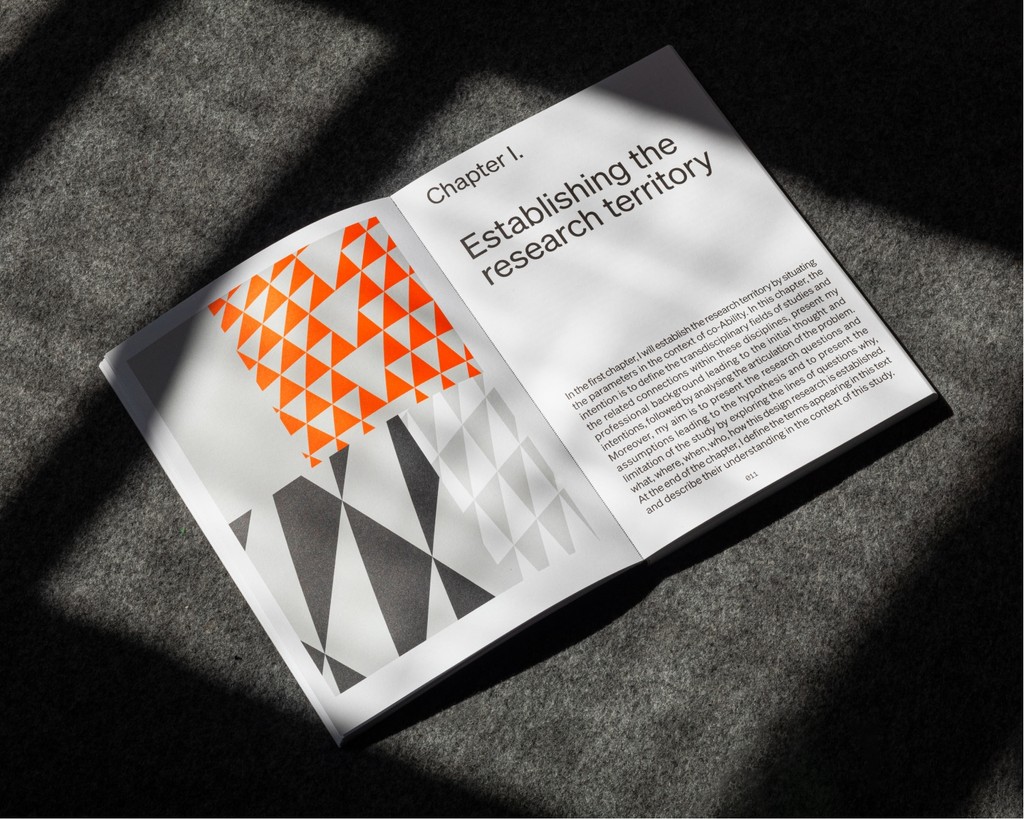
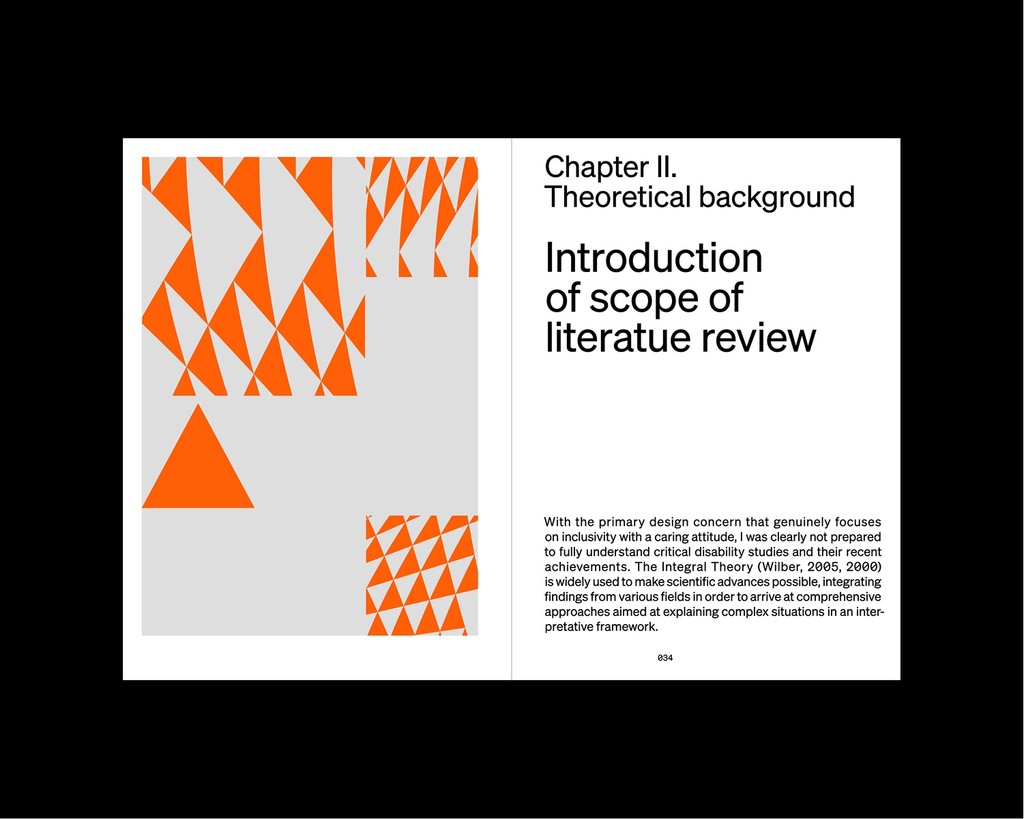
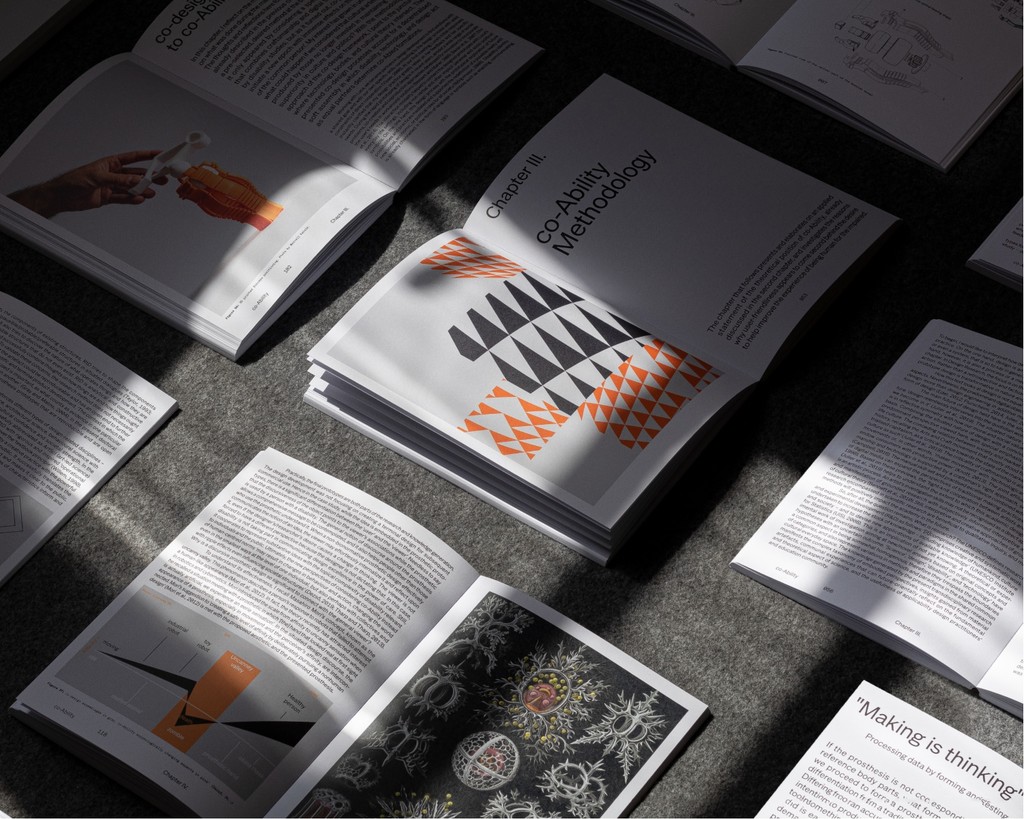
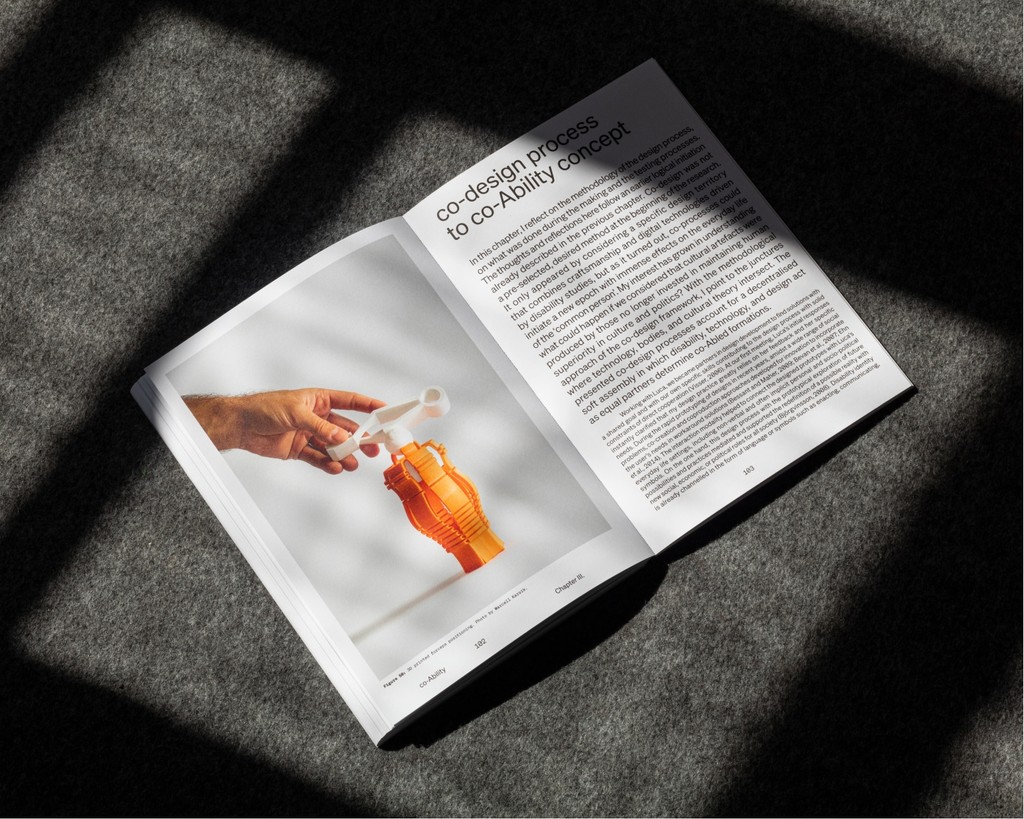
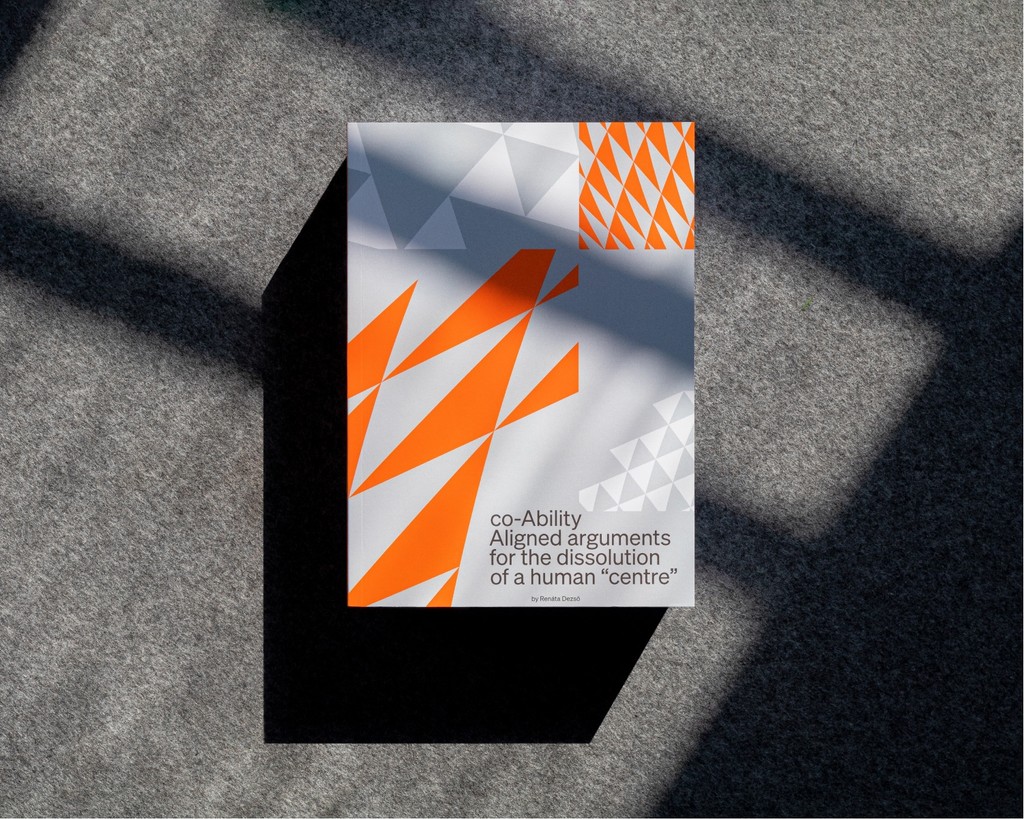
co-Ability is the doctoral dissertation of designer and researcher Renáta Dezső, exploring how co-design can redefine human–technology relations beyond the paradigm of disability. The publication, created for the DLA programme at Moholy-Nagy University of Art and Design, required a visual system that could translate theoretical depth into tangible clarity. The challenge was to design a modular editorial structure that mirrors the research methodology itself: precise, systematic, and inherently human. The project included both design and object photography, connecting material and conceptual layers within one cohesive visual framework.
Outcome
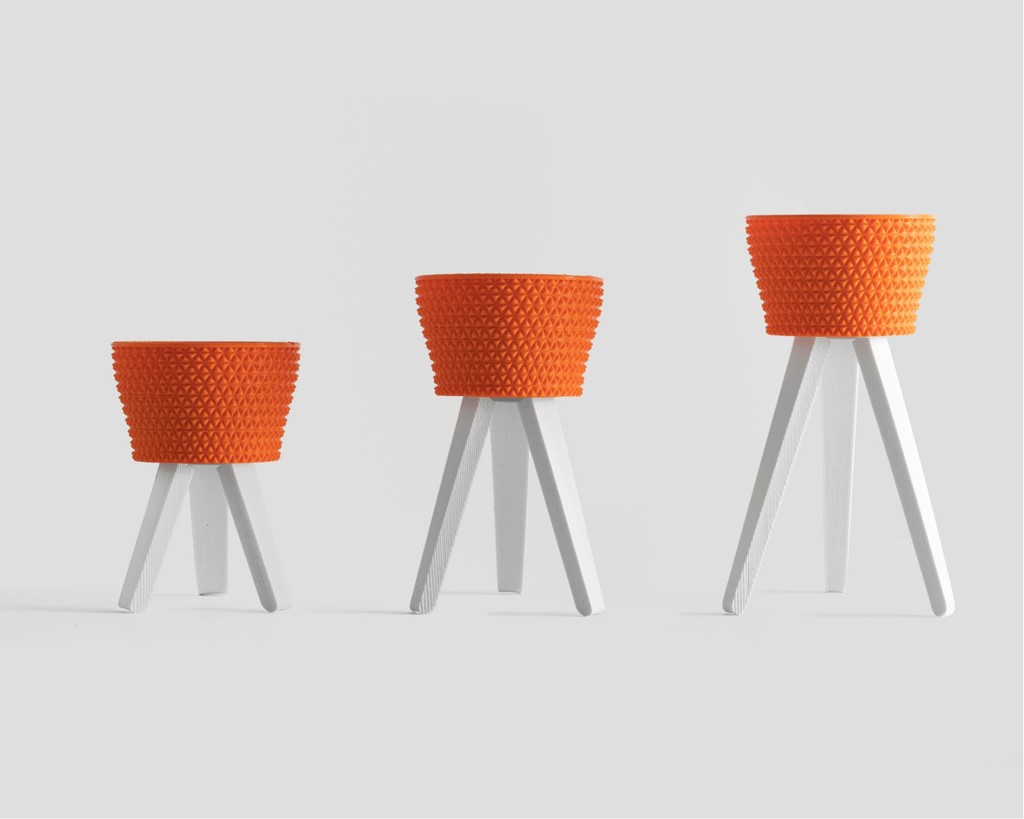
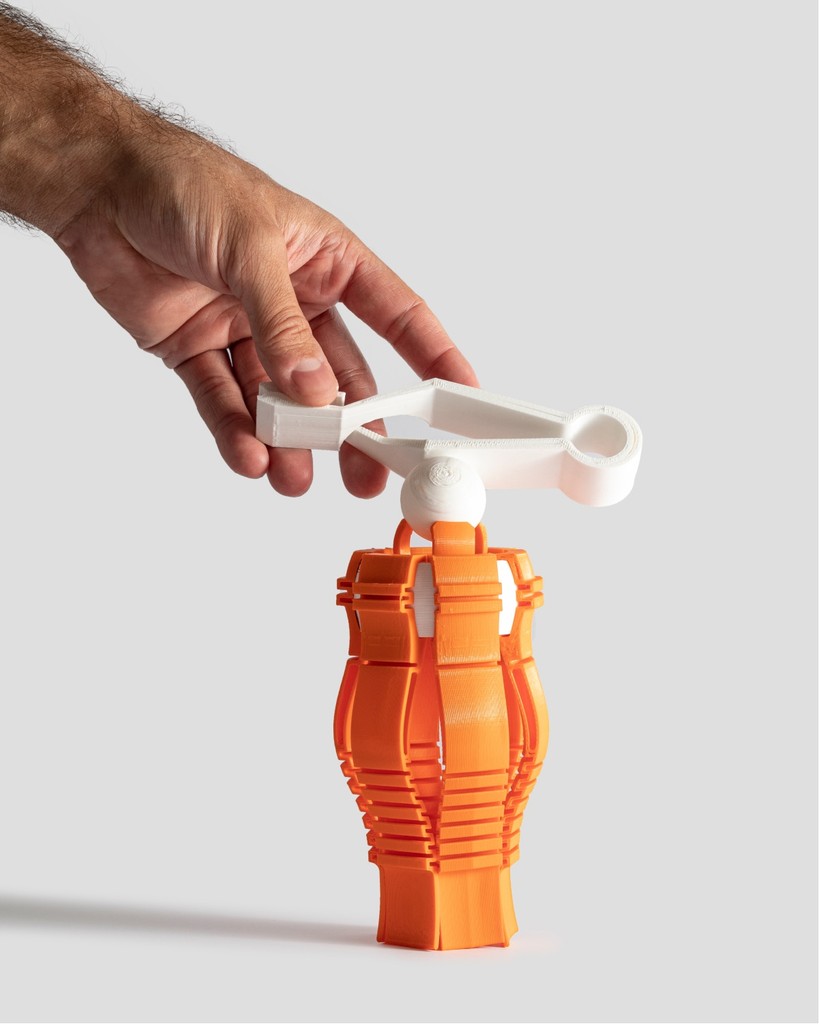
The design draws on the visual logic of Dezső’s 3D-printed objects: modularity, rhythm, and repetition. An orange-and-grey pattern system reflects both the technological materiality and the collaborative essence of co-design. The typographic structure follows a rational, almost engineered logic - tight spacing, high contrast, minimal ornament - echoing the precision of research while remaining approachable and human. Across print and presentation formats, the outcome is a cohesive, future-oriented visual identity that communicates the humanist side of technology and the modular beauty of research.
Credits
Project name: co-Ability — Aligned arguments for the dissolution of a human "centre" - By Renáta Dezső Year: 2022 Photos by Marcell Kazsik
Background
co-Ability is the doctoral dissertation of designer and researcher Renáta Dezső, exploring how co-design can redefine human–technology relations beyond the paradigm of disability. The publication, created for the DLA programme at Moholy-Nagy University of Art and Design, required a visual system that could translate theoretical depth into tangible clarity. The challenge was to design a modular editorial structure that mirrors the research methodology itself: precise, systematic, and inherently human. The project included both design and object photography, connecting material and conceptual layers within one cohesive visual framework.
Outcome
The design draws on the visual logic of Dezső’s 3D-printed objects: modularity, rhythm, and repetition. An orange-and-grey pattern system reflects both the technological materiality and the collaborative essence of co-design. The typographic structure follows a rational, almost engineered logic - tight spacing, high contrast, minimal ornament - echoing the precision of research while remaining approachable and human. Across print and presentation formats, the outcome is a cohesive, future-oriented visual identity that communicates the humanist side of technology and the modular beauty of research.
Credits
Project name: co-Ability — Aligned arguments for the dissolution of a human "centre" - By Renáta Dezső Year: 2022 Photos by Marcell Kazsik
Background
co-Ability is the doctoral dissertation of designer and researcher Renáta Dezső, exploring how co-design can redefine human–technology relations beyond the paradigm of disability. The publication, created for the DLA programme at Moholy-Nagy University of Art and Design, required a visual system that could translate theoretical depth into tangible clarity. The challenge was to design a modular editorial structure that mirrors the research methodology itself: precise, systematic, and inherently human. The project included both design and object photography, connecting material and conceptual layers within one cohesive visual framework.
Outcome
The design draws on the visual logic of Dezső’s 3D-printed objects: modularity, rhythm, and repetition. An orange-and-grey pattern system reflects both the technological materiality and the collaborative essence of co-design. The typographic structure follows a rational, almost engineered logic - tight spacing, high contrast, minimal ornament - echoing the precision of research while remaining approachable and human. Across print and presentation formats, the outcome is a cohesive, future-oriented visual identity that communicates the humanist side of technology and the modular beauty of research.
Credits
Project name: co-Ability — Aligned arguments for the dissolution of a human "centre" - By Renáta Dezső Year: 2022 Photos by Marcell Kazsik